
Worried About Your Wedding Photos? How We Photograph Weddings Without Turning Your Day Into a Photoshoot
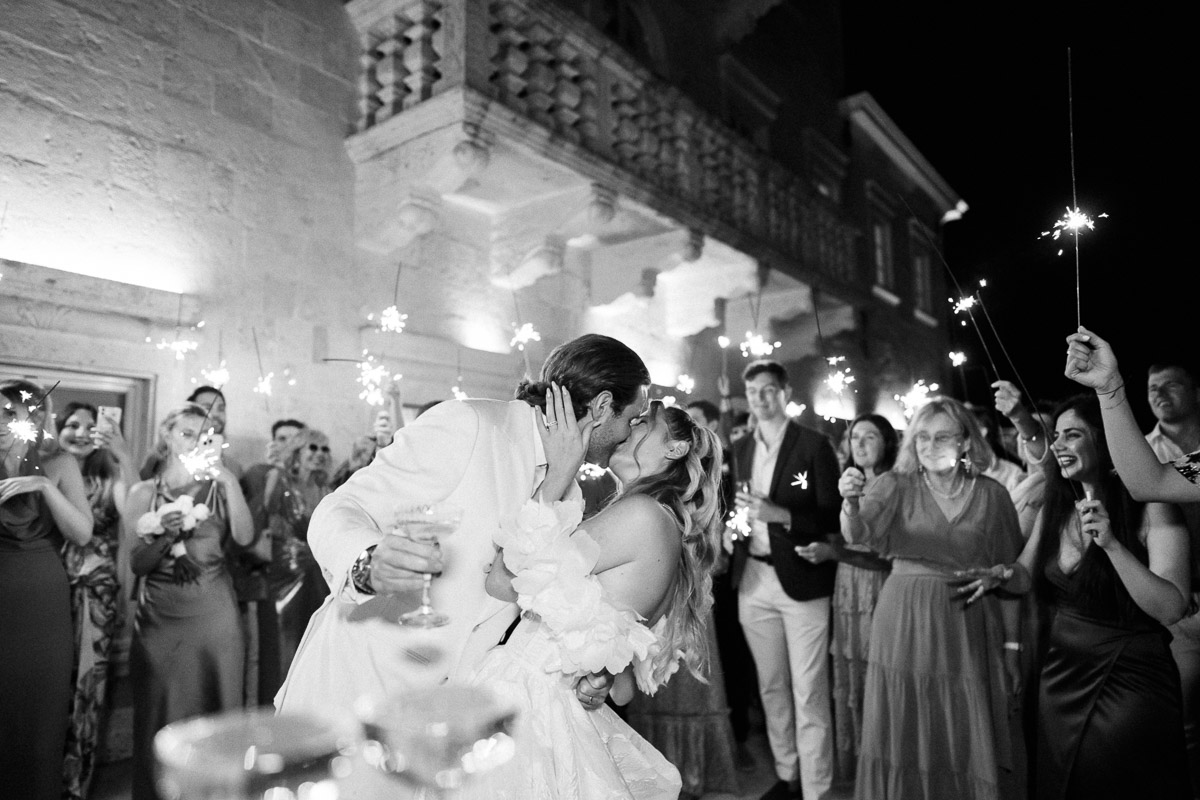
Wedding photography questions are rarely just about cameras. Most of the time, they are really questions about trust: Will the important moments be noticed? Will we look awkward? What happens if the timeline falls apart, the church has restrictions, the weather changes, or someone we love starts crying while we are looking the other way?
After photographing weddings since 2008 and working through more than 1,000 wedding days, we have heard the same fears in many different forms. Couples ask about candid photographs, posing, family portraits, ceremony reactions, first looks, second photographers, privacy, editing, delivery timelines, weather, drone coverage, church rules and what happens when the unexpected happens.
This article brings those wedding photography questions together and explains the principles behind the way we work as an Ontario wedding photographer and videographer team.
Our philosophy is simple: your wedding should not become a production created for photography. Photography should preserve the wedding you actually lived.
That means preparing carefully, stepping in when direction is useful, and disappearing into the background when a real moment is already happening.
Wedding Photography Questions About Missing Important Moments
One of the strangest things about getting married is that you are at the centre of the wedding while missing a large part of it.
You may not see your mother’s expression as you walk down the aisle. Your partner cannot watch both you and their parents at the same time. A grandparent may quietly reach for someone’s hand during the vows. A friend may start crying three rows behind you. None of those moments can be staged later.
This is why documentary coverage matters so much to us.
During the ceremony, our attention moves constantly. We photograph the obvious action, but we also watch parents, grandparents, siblings, wedding parties, children and guests. Reactions often happen a second before or after the moment everyone expects.
Experience helps because weddings develop patterns. We learn to anticipate when a parent is about to react, when a nervous laugh may break the tension, when the room will turn toward the entrance, and when it is worth briefly looking away from the couple to see what is happening around them.
No photographer can honestly promise to capture every event occurring simultaneously in a room. What we can do is remain alert, work with intention and position ourselves so that the emotional story is bigger than a sequence of formal milestones.
The first kiss matters. The person crying during it may matter just as much.
Wedding Photography Questions About Candid Photos and Posing
Many couples tell us they want candid wedding photography but also admit that they feel awkward in front of a camera. Those two things are not contradictory.
Being documentary photographers does not mean leaving you alone in uncomfortable silence and hoping something magical happens. It also does not mean directing every finger, expression and movement.
We prefer a middle ground.
During portraits, we may choose the light, adjust your position, fix the way a jacket sits, move a hand or suggest a simple action. Once the frame is working, we give you space. A small amount of direction often creates the conditions for a much more natural photograph.
During the rest of the wedding, we interfere far less. If your friends are making you laugh, there is no reason to manufacture laughter. If your father is seeing you dressed for the ceremony for the first time, his reaction belongs to him. Our role is to recognize the moment and preserve it without making ourselves the centre of it.
For us, the strongest portraits feel polished without looking over-controlled, while the strongest candid photographs feel emotionally honest without looking accidental.
If You Think You Are Not Photogenic
This is one of the most common wedding photography questions hidden inside a different sentence: “We are awkward in photos.”
Most people we photograph are not professional models, and they do not need to be.
A large part of our job is noticing the things that make a portrait work before you have to think about them. We watch posture, hands, light, background, clothing, movement and the distance between two people. Sometimes a change of only a few centimetres improves the photograph.
We also pay attention to how much direction each couple wants. One person may relax immediately, while someone else may need more guidance at the beginning and far less ten minutes later.
You should never need to memorize poses before your wedding. Good direction should feel like support, not choreography.
The goal is not to turn you into different people. The goal is to photograph you in a way that feels natural, confident and recognizable.
Wedding Photography Questions About Family Photos
Family portraits are often more important in ten or twenty years than they seem on the wedding day. At the same time, poorly organized family photos can quietly consume an entire cocktail hour.
We try to solve that problem before the wedding.
A clear family list helps us understand which combinations matter, who needs to remain nearby after the ceremony, whether parents are separated, whether grandparents should be photographed first, and whether larger extended-family groups are better scheduled at another point in the day.
Older relatives, young children and anyone with mobility considerations can also be photographed earlier in the sequence so they are not kept standing and waiting unnecessarily.
The list does not need to contain every possible group of people. It should contain the photographs you would genuinely regret not having.
Efficiency matters because the purpose of family portraits is to preserve relationships, not to make your family stand in a line for an hour.
What If We Have a Very Long Shot List?
We understand why couples make shot lists. A photographer can see the room, but cannot automatically know the history inside it.
We may not know that the woman beside your mother helped raise you. We cannot identify the group of friends who travelled across the world unless someone tells us. A small piece of jewellery may look decorative to us while carrying enormous meaning to you.
Please tell us about those things.
Where shot lists become less useful is when they try to script hundreds of generic photographs that could happen at any wedding. If we spend the entire day recreating a checklist, we stop observing what is happening in front of us.
Our preference is to use your list as a map of priorities. It tells us which people, traditions, objects and relationships deserve particular attention while leaving enough freedom to notice the unexpected.
Planning helps us know where to look. Documentary instinct helps us recognize when the photograph is there.
Wedding Photography Questions About First Looks
A first look is not a requirement. It is both an emotional decision and a timeline tool.
For some couples, seeing each other privately before the ceremony removes a huge amount of nervous energy. It may also allow us to complete couple portraits, wedding-party photographs or family pictures before guests arrive.
Other couples have always imagined seeing each other for the first time at the ceremony. If that moment matters deeply, there is no reason to change it simply because a first look can make a schedule easier.
When we discuss a first look, we look at the complete day: travel time, ceremony start, available light, wedding-party size, family photos, venue access and how much breathing room remains before guests arrive.
There is no universally correct choice. The right answer is the one that supports both your priorities and the reality of your timeline.
Do We Need a Second Wedding Photographer?
A second photographer should solve a real logistical problem rather than exist only because it makes a package sound larger.
Two photographers can be valuable when getting ready happens in separate locations, the guest count is large, the ceremony limits movement, or several important events happen at almost the same time.
A second angle can also add depth to ceremonies. While one photographer remains focused on the primary action, the other can watch parents, guests or the opposite side of the room.
However, not every wedding needs two photographers. An experienced photographer can cover many weddings alone very effectively, especially when the schedule and locations are straightforward.
We prefer to look at your actual wedding before recommending an additional person.
Wedding Photography Questions About Church Restrictions
Churches and houses of worship can have very different photography rules.
Some allow movement during the ceremony. Others restrict photographers to specific areas, prohibit flash, limit access to the aisle or ask vendors not to move during particular parts of the service.
We would much rather know those rules before the processional begins.
If your church has restrictions, send them to us. When necessary, we are happy to coordinate with the officiant or ceremony contact. Understanding the limitations in advance lets us choose positions intelligently instead of discovering the rules while something important is happening.
Respect is part of professional ceremony coverage. The goal is to document what happens without becoming a distraction from it.
Wedding Photography Questions for Multicultural and Fusion Weddings
Knowing how to photograph weddings is not always the same as understanding a particular wedding.
Multicultural and fusion celebrations can include several ceremonies, family roles, blessings, entrances, exchanges, dances and traditions that happen quickly or simultaneously. A moment that looks visually small may carry enormous cultural meaning.
Before these weddings, information is incredibly useful. We review timelines, talk with planners and study ceremony outlines when they are available. We want to know what is about to happen, who is involved and which moments have special significance.
This preparation makes us less intrusive on the wedding day. When photo and video already understand the sequence, we can position ourselves before a tradition begins instead of reacting after it has already started.
Our aim is not simply to photograph something because it looks interesting. We want to understand enough context to recognize why it matters.
What If the Wedding Timeline Keeps Changing?
Real wedding timelines change. That is normal.
Hair and makeup may run later than expected. Venue access can shift. Transportation needs more time. Dinner service moves. Speeches become longer. A planner may realize that changing one part of the schedule protects more time for dancing.
We do not expect the final wedding to follow the first draft of the timeline minute by minute.
Instead, we look for priorities and buffers. Which parts of the day are fixed? Where can we gain time if something runs late? Which photographs can move without affecting the ceremony? How much travel time is realistic?
Good planning is not about controlling every minute. It is about knowing which minutes are flexible.
Among all the wedding photography questions we receive, timeline questions are some of the most practical because small decisions made in advance can completely change how relaxed the day feels.
What If We Do Not Want Getting-Ready Photos?
Then you do not need them.
Wedding galleries often repeat the same traditions so frequently that couples begin to assume those traditions are mandatory. They are not.
If getting ready with family and friends is meaningful to you, it can become one of the most emotional parts of the gallery. If hair and makeup is happening elsewhere and you would rather begin coverage at the venue, that can be a smarter use of your photography time.
The same applies to cake cutting, formal entrances, sunset portraits and many other wedding conventions.
Your timeline should reflect your wedding, not a template borrowed from someone else’s.
Wedding Photography Questions About Rain and Bad Weather
Rain does not automatically mean bad wedding photographs.
Clouds can create beautiful soft light. Wind can add movement. Rain can completely change the atmosphere of a location. The real issue is whether there is a practical plan for comfort, timing and alternatives.
Before the wedding, we think about covered areas, interiors, nearby architecture, portrait timing and locations that remain usable if the original plan no longer makes sense.
Weather decisions should also consider people before photographs. Extreme heat, cold or heavy rain can become exhausting very quickly, especially for children, grandparents and wedding parties in formal clothing.
A photograph is not successful if creating it makes you miserable.
Our job is to work with the day we receive and find the strongest option inside real conditions.
Wedding Photography Questions About Dark Venues and Difficult Light
Real weddings happen in every kind of light: bright midday sun, dark churches, rainy afternoons, candlelit rooms, mixed artificial light and dance floors that change colour every second.
Natural light is an important part of our visual style, but a natural-light-inspired approach does not mean being unable to work when the sun disappears.
Sometimes we adjust portrait timing. In other situations, we move to a different part of the room, use reflected light or add our own lighting while preserving the atmosphere of the space.
We do not want every wedding to look as if it happened at the same hour in the same venue.
The goal is to make your photographs beautiful while allowing the wedding to retain its real mood.
What If Sunset Photos Are Important to Us?
Tell us before the wedding.
Golden-hour portraits rarely happen by accident. Sunset time, venue orientation, surrounding buildings, trees, weather, dinner service and travel can all affect whether the light is actually available when the schedule says it should be.
If sunset photographs matter, we can look for a realistic window. Often ten or fifteen minutes is enough.
You should not need to disappear from dinner for an hour to get beautiful evening portraits.
A little planning can create a short, calm break in the day and then return you to your guests.
How Do We Keep Group Photos From Taking Over Cocktail Hour?
Many couples want photographs with university friends, cousins, work friends, people who travelled internationally and groups that may never be together in one place again.
Those photographs are worth making.
The key is not waiting until the end of the evening and hoping everyone can still be found.
Tell us which groups are genuinely important. Some can be photographed immediately after the ceremony, others during cocktail hour, and a few may happen more naturally later when the group is already together.
Structure protects spontaneity. A few minutes of organization can save a much larger amount of time later.
Wedding Photography Questions About Photo Versus Video
Photography and film preserve different kinds of memory.
A photograph holds a fraction of a second. It can show you an expression you never saw in real time and become something you live with on a wall for decades.
Video preserves duration. It keeps voices, pauses, movement, music, speeches and the sound of a room.
When couples ask whether they need both, we usually suggest thinking about what they are most afraid of forgetting.
If still images are how you naturally hold memories, photography may carry more emotional weight. If voices and movement matter deeply, film often becomes increasingly valuable with time.
We do not believe couples should be pressured into buying every possible service. The right coverage is the coverage that protects the memories you care about most.
Will the Photographer and Videographer Get in Each Other’s Way?
This is one of the practical advantages of working with a coordinated photo and video team.
The ceremony aisle belongs to both mediums. So does the first look, the first dance and the small window of sunset light. If separate teams independently decide that the same exact position is essential, someone can easily end up in someone else’s frame.
Alexandra and Vladimir have worked together for years. We communicate about positioning, movement, timing and priorities before and during the wedding.
Photo and video should not compete to create two different productions. Both should support the same wedding.
Most importantly, neither team should make you feel as though you are surrounded by a film set.
Wedding Photography Questions About Drone Coverage
Aerial footage can add a wonderful sense of place to an estate, winery, private property, waterfront venue or large landscape.
It can also help tell the story of scale in a way that ground-level cameras cannot.
However, drone coverage always depends on safety, weather, location, airspace and venue rules. We follow applicable requirements and check whether flying is appropriate rather than treating a drone shot as something that must happen at every wedding.
Couples who want to understand the general Canadian rules can review Transport Canada drone safety guidance.
A drone is a storytelling tool. It is never more important than the people and regulations around it.
How Do You Know What Matters During Our Ceremony?
Ceremony outlines are extremely helpful, especially when the structure includes religious or cultural traditions we need to anticipate.
Knowing that a blessing, exchange, family interaction or symbolic ritual is about to happen changes where we stand and what we watch.
Some moments last only a few seconds. Preparation allows us to be ready before they begin.
Among the most important wedding photography questions couples can answer for us before the wedding is a simple one: “Is there anything happening during the ceremony that may not be obvious to someone outside your family, faith or culture?”
That information helps us work quietly and photograph with much more intention.
Will You Photograph Our Guests or Mostly Us?
Your gallery should not look as though you got married alone.
The couple is the centre of the story, but guests are a huge part of what gives a wedding its emotional scale.
We photograph the people watching you, conversations during cocktail hour, friends laughing during speeches, children moving through the reception and family members interacting when they do not realize a camera is nearby.
These photographs may look less dramatic in a social media portfolio than a large editorial portrait.
Years later, they can become some of the most valuable images in the gallery because they preserve the people who were there with you.
What If Someone We Love Cannot Attend the Wedding?
This question changes the meaning of wedding photography very quickly.
Sometimes a gallery becomes a way to bring part of the wedding to someone who could not be there. In other cases, photographs of parents or grandparents become far more important with time than anyone could have predicted on the wedding day.
That is one reason we pay so much attention to people around the couple.
We never know which photograph will eventually carry the most emotional weight.
A wedding image is not only content for the week after the wedding. It can become family history.
Wedding Photography Questions About Privacy
Not every couple wants their wedding published online.
Some people are naturally private. Others work in professions where public exposure matters. Families may have children they do not want shown on social media. A couple may simply prefer that the wedding remain personal.
If privacy matters to you, bring it up before booking.
Publication arrangements can vary, including selective restrictions or more comprehensive privacy agreements. The important thing is clarity before the wedding rather than discovering different expectations afterward.
We want couples to understand how their photographs may be used and to feel comfortable discussing boundaries with us.
Wedding Photography Questions About Editing and Retouching
There is a difference between flattering editing and changing someone’s identity.
Our editing includes exposure, colour, contrast, crop, skin tone and consistency between photographs created in very different lighting conditions throughout the day.
Retouching, when appropriate, should still leave you looking like yourself.
One of the nicest pieces of feedback we have received was that the finished images felt like slightly better-looking versions of the people in them. That is much closer to our philosophy than creating artificial perfection.
We want you to recognize yourself immediately.
Why Do Wedding Photographers Not Deliver Every RAW File?
This is another recurring topic within wedding photography questions.
Pressing the shutter is only one stage of creating a finished gallery. A wedding produces duplicate sequences, test exposures, transitional frames, photographs where someone blinked and multiple near-identical images made intentionally so we can select the strongest expression.
Curation is part of photography.
Editing is part of photography as well.
The final gallery is not simply a folder containing everything the camera recorded. It is a selected and edited body of work designed to tell the day coherently.
More files do not automatically mean a better record of the wedding. Stronger selection usually creates a better story.
Wedding Photography Questions About Gallery Delivery
The wait after a wedding feels very different from the wait before it.
Once the day is over, photographs become one of the main ways to return to it. We understand why couples ask about previews and delivery timelines.
Expected delivery should be clear before booking and reflected in your agreement. If you have a time-sensitive reason for needing particular photographs, tell us rather than assuming we know.
At the same time, a wedding gallery is not finished by applying one preset to thousands of files. Selection, colour work, consistency, sequencing and detailed editing all take time.
We would rather deliver a carefully finished gallery than rush the part of the process that determines how the wedding will be remembered visually.
What Happens If the Photographer Gets Sick?
It is not the most romantic subject, but it is one of the most reasonable wedding photography questions a couple can ask.
A wedding cannot simply move to another weekend because a vendor becomes ill.
After many years in the industry, reliability and contingency planning matter enormously to us. We maintain relationships with experienced professionals we know and trust. If an emergency made it physically impossible for Alexandra to photograph a wedding, the priority would be arranging capable coverage while keeping the editing and post-production as consistent as possible with the work the couple booked.
A backup plan is not pessimism. It is part of professional responsibility.
What If Our Wedding Does Not Follow a Traditional Timeline?
There is nothing wrong with that.
You may have no wedding party. Your ceremony could happen in the morning. Two ceremonies may happen on the same day. Dinner might be long and formalities minimal. You may want ninety minutes of dancing and only ten minutes of couple portraits.
We would rather understand why you designed the celebration that way than force it into a template.
The best timeline is not the one that resembles the largest number of wedding blogs.
It is the one that lets you experience the people and traditions you invited into the day.
Wedding Photography Questions About Engagement Sessions
An engagement session can be much more useful than simply producing photographs for invitations.
It gives us a chance to learn how you interact before the wedding. We see how much direction feels comfortable, whether one person is more camera-conscious, what kind of movement feels natural and what type of atmosphere suits you.
You also get to experience being photographed without the pressure of a wedding timeline.
Location should support the story and the visual direction you want. We have planned sessions around meaningful places, architecture, waterfronts, city streets, parks and locations connected to a proposal or personal history.
Clothing matters too. A very formal look communicates differently in an urban architectural setting than beside a lake or in a field.
The purpose is not to choose the most popular location. It is to choose one that makes sense for you.
What If Something Goes Wrong on the Wedding Day?
Something small probably will.
A boutonniere pin disappears. Transportation runs late. Wind changes the ceremony setup. A speech lasts fifteen minutes longer than expected. Someone needed for family portraits goes to the bar.
Weddings are live events, and experience matters most when reality stops following the plan.
Our job is not to create an imaginary day where nothing unpredictable happens. Instead, we adjust without turning every small change into a crisis.
That may mean moving portraits, changing the order of family photos, choosing another location, adapting to the light or communicating with the planner so the couple does not need to solve the problem themselves.
You should not have to manage your photographer while you are getting married.
The Wedding Photography Questions Behind Our Approach
Most wedding photography questions eventually lead back to the same concern: “Will we be able to trust you with a day we cannot repeat?”
That trust is built before the wedding as much as during it.
We study the timeline and learn about the family structure, ceremony rules and cultural traditions. Light, travel time and realistic buffers are considered before the day begins. Privacy expectations are discussed when they matter, while additional coverage is recommended only when it solves a real problem.
Once the wedding begins, that preparation gives us freedom.
Instead of constantly checking a list, we can watch people and anticipate what may happen next.
That is where the work becomes less about documenting a schedule and more about recognizing emotion.
What We Are Really Trying to Photograph
Of course we care about beautiful portraits.
Composition matters. Light matters. Clothing, florals, architecture, stationery and the atmosphere of the room all contribute to how a wedding looks.
But those things are the setting.
The wedding itself is human.
It may be the pause before your partner sees you. Perhaps it is your father trying not to cry, or a friend laughing during a speech. Sometimes it is a hand reaching for another hand during the vows. At another wedding, it may be the second of silence before the ceremony doors open.
Then there are moments we create more deliberately: a beautifully lit portrait, a quiet walk at sunset, or a carefully composed frame that feels cinematic and timeless.
We do not believe documentary and editorial wedding photography are opposites.
Documentary photography preserves what happened. Editorial direction gives us an opportunity to interpret how part of the day felt.
Our work lives between those two ideas.
Wedding Photography Questions Do Not Always Have One Answer
After more than 1,000 weddings, experience has taught us that the answer is rarely to use the same formula every time.
One couple benefits from a first look, while another should absolutely wait for the ceremony.
A large, complicated wedding may benefit from a second photographer. A smaller celebration with simple logistics may not need one at all.
Some families want an extensive formal portrait list, while others want only parents and siblings. One couple may love a longer sunset session; someone else would rather stay on the dance floor.
The principle underneath those choices stays consistent: we want photography to adapt to the wedding, not the wedding to adapt to photography.
Preparation lets us be flexible. Experience helps us know when to direct and when to step away. Observation helps us notice the photograph that no one put on a list.
Your Wedding Photographs Should Feel Like a Memory, Not a Performance
Years after your wedding, we do not want you to remember a day full of photography instructions.
We want the images to bring back the room, the people, the nerves before the ceremony, the chaos of the dance floor and the way your family looked at you.
Most importantly, we want you to recognize the version of yourselves who existed on that particular day.
That is why our approach is documentary at its core, editorial when direction adds something valuable, and always centred on people.
If you are researching wedding photography questions because you are planning a wedding in Toronto, the GTA, Niagara, Muskoka, Prince Edward County or elsewhere in Ontario, we encourage you to look beyond a photographer’s highlights and study complete wedding stories.
You can explore our full wedding galleries to see how we photograph ceremonies, portraits, family, guests, details and receptions across an entire day.
If our approach feels right for you, tell us about your wedding. Share what you are excited about, what matters most, and what you are worried might go wrong.
Very often, the best planning conversation begins with the question you were almost afraid to ask.
Wedding Photography Worries Couples Have
September 15, 2026
back to blog
Let’s Begin Together

We’d Be Honored to Tell Your Story
Whether you're planning a once-in-a-lifetime wedding or capturing the simple magic of family, we’d love to be there — quietly documenting it all, with heart and artistry.


